Monday, March 21, 2016

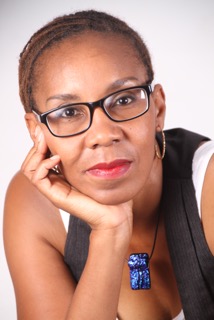
African Writers You Should Know: Blessing Musariri


Blessing Musariri is a talented, adaptable writer born and bred in Harare, well known around the continent. She has written award-winning children’s books, is a well-established poet, writes genre novels for adults, and also includes powerful short stories in her well-equipped arsenal.  Her writing is published around the world and translated into many languages. When I asked her what she prefers to be called since in her bios she is sometimes called a poet, other times a children’s writer. She said, “I prefer ‘writer’ because that is what I am, and that is what I do, I write.  It doesn't matter what it is, if I feel an inspiration, I write.  I'm not limited to one genre. I just like working with words.”

Blessing’s children’s books include: The Mystery of Rukodzi (Hodder Education UK), Rufaro’s Day (Longman Zimbabwe), Going Home: A Tree’s Story (Weaver Press, Harare), and The Adventures of Bakara Blackbird (Mukuki N Nyota, Tanzania). 

“Rufaro's Day did the best actually,” she told me “As it was a first attempt by Longman to do a full colour children's reader at the time.  It was approved as a supplementary reader by the CDU - curriculum development unit, and was put on the funding list for schools so they actually did a second print of this book which made it a two print run of 2000 copies in total. It won two National Arts Merit Awards in 2000 for Best Picture Book 0-8 years and Best First Creative work in the literary arts division. After that things went awry economically in the country and that was that.”

Besides those two writing awards, Blessing has won the 2006 Zimbabwe Book Publishers Association award for best book for Going Home: A Tree's Story and a specially created second prize for a poem for the Susie Smith Memorial Prize in 2009. She was selected last year by The African Poetry Book Fund in the USA to be included in the 8 New Generation African Poets, a collection of poetry chapbooks from eight up-and-coming African poets. Her book Mitu’s Spice Tour is included in the box set. In 2014 she won Cordite Books’ inaugural prize for detective novel with her manuscript Useful Knowledge for a World Class Detective. The prize came with a $1000 USD cheque and a publishing deal. The hope is the book will be out soon.

Zimbabwe is said to have the highest literacy rate of any country in Africa, but still Blessing’s story of being a writer there will sound so familiar to many Batswana writers. “I think the biggest challenge is one of economics.  People love to read but books are too expensive for the average person.  I feel that the local publishers stick to traditional methods to reach audiences, and they don't work for our economic models so when they don't work,  they simply say  there is no reading culture so we cannot keep publishing creative writing as it makes no sense.  This limits writers’ markets for their works and forces us to look elsewhere for publishing opportunities (or to write textbooks) , but internationally it's a tough playing field for the African writer as here there tends to be only the desire for typically ‘African stories’ by publishers because it's easy to sell what is already trending. There are many, many talented African writers but it seems international publishers have only enough space for a select few to push through to the top every few years and the rest just shuffle along. If I had an idea how all this could be solved I'm sure I would be the most financially solvent writer on the continent right now.  As it is, my solution for myself is to get a day job and this is easier said than done.”

And in a perfect world, how does Blessing see her writing career in the future?  “In a perfect world I would have a book out that will be studied in universities internationally as a work of art and I would have won many international awards and prizes for it.  I'm not greedy, if just one book could do this for me I would be ecstatic. Of course having done this it would have to naturally set me up for life so that after that I become a kind of King Midas of literature and can do no wrong.”

Crossing fingers her dream comes true!

(This first appeared in my column It's All Write in Mmegi's 18 March 2016 issue)


Friday, March 18, 2016

Read my romance- If Love Was Easy!!!

FunDza is a fantastic literacy website in South Africa. They send out stories and books to people's cellphones through the Mobi network, The stories can also be read online.

This week my romance novel, If Love Was Easy is up at the site. Stop over and let me know what you think!

Thursday, March 17, 2016

The Many Ways to Cheat a Writer


Making a living as a writer is tough, tougher when it seems the world is out to get you unless you hustle like a maniac. Even some of the big name writers need to take university teaching jobs or other part-time work to keep their head above water. Last year the results of a study by the Authors’ Licensing and Collecting Society in the United Kingdom found that a professional writer’s annual mean income there was 11,000 British Pounds, which is below their national minimum wage. In their case, professional writer was defined as a person who spent at least half of their working life working as a self-employed writer. A professional earning less than minimum wage?  It sort of makes me want to cry.

And yet wherever you look, folks are trying to not pay writers, some are even proud of the fact that they are treating writers like their own personal slaves.  Like the UK Huffington Post editor Stephen Hull who said recently, “I love this question, because I’m proud to say that what we do is that we have 13,000 contributors in the UK, bloggers… we don’t pay them, but you know if I was paying someone to write something because I wanted it to get advertising pay, that’s not a real authentic way of presenting copy. So when somebody writes something for us, we know it’s real. We know they want to write it. It’s not been forced or paid for. I think that’s something to be proud of.” Huffington Post allegedly makes a monthly income of $2,330,00 and they can’t pay their writers?! And yet what is a newspaper without writers? A bunch of blank pages— or blank screens in this case.

Or how about the uproar caused at the end of last year when Philip Pullman pulled out as a patron for Oxford Literary Festival saying that he could no longer support a literary festival that did not pay its writers. He let that dirty little cat out of the bag— the fact that most literary festivals don’t pay writers for the work they do, even given the fact that a literary festival is basically tents and empty chairs without writers.  These festivals might pay the very biggest names, but not the others. The Hay Festival, one of the most prominent festivals in the UK, pays some writers and not others. The writers they pay, they offer to pay in cash or wine (!?!).  I mean honestly. You really cannot make this stuff up. I think next time I’m at the till at Choppies I’m going to offer to pay in dung beetles, I wonder how that’s going to go over.

Last week Chocolat author Joanne Harris pulled out of a UK litfest because of the very restrictive demands. The organisers required that she not do any events in the area for six weeks around her appearance at the festival, they wanted unrestricted access to the filming of her event, and five free copies of her book. And for that she was going to be paid 50 British pounds!?!

How do we even deal with this? It’s tricky. For publications that don’t pay writers you don’t write for them. Straightforward. But what about the literary festivals?  What if you have a new book out and a literary festival invites you? They’re not paying, but they’re giving you a place to market your book— a bit of a grey area. But it’s important to always be vigilant and to think thoroughly about your own personal actions in these dodgy spaces— are you as a writer doing things that make it difficult for other writers to get a fair wage? If you fill up the pages of Huffington Post with your free writing, are you not making it more difficult for writers to make a professional wage? Instead you can do like Joanne Harris and Philip Pullman did and say, no thanks. Already in the news last week it was reported that the Oxford Literary Festival is trying to find ways to pay the writers now. 
So, small drops really do fill the ocean. 

(This first appeared in my column It's All Write in 4 March 2016 issue of Mmegi)


Wednesday, March 2, 2016

Sometimes Forgiving is Wrong

This morning I read this article, Why I Reject Forgiveness by Elizabeth Switaj and it couldn't have come to me at a more perfect time.  As she says in this pseudo-spiritual world we now live in we are told that the only way you can recover from a hurt is to forgive the person who hurt you. We're told good people forgive others.  Or as Elizabeth Switaj points out in the article-

"Pseudo-spirituality has made forgiveness a marker of personal virtue. If you forgive, then you know you are enlightened. Deepak Chopra describes forgiveness as the “recognition that actions that are perceived as hurtful or wrong are the perspective of the small ego mind, not the higher self.” If you perceive an assault on yourself and your body as too wrong to forgive, you are being small-minded."

I'm going through the ending of my marriage at the moment after a horrible betrayal. I've been told if I can't forgive I obviously do not know how to love another person completely.  I've felt since this happened that I was flawed in some way because in my heart I could find no forgiveness and I doubt I ever will. Pop psychology was blaring in my head that without that forgiveness I would never be free and that was dispiriting. I was the victim but now I felt victimised again by my inability to forgive what was done to me.

On this, Switaj says: "This attitude (the one mentioned above) ignores that the choice not to forgive can come from a place of strength."

It's very easy for a person to say the words- I forgive you. But what use is that? I refuse to live a lie. I am finding a way to get past all of this, and on my path I do not see forgiveness. That does not make my path wrong, or weaker, or me a lesser person. I will recover only in my way, no one else's, and that's how it should be. That's how it should be for everyone. 

Monday, February 22, 2016

I’ve Come to Take You Home by Diana Ferrus, a review


Diana Ferrus is a writer, poet, performance poet and story-teller who lives in Cape Town. She writes in both English and Afrikaans. This book, I’ve Come To Take You Home, is a collection of poetry in English. The title poem is written to Sarah Bartmann, the Griqua woman who was taken to Europe and shown around as a “freak” and whose remains (her brain and private parts) were put on display at the Musee de L’homme in Paris after her corpse was dissected. When the French were trying to pass legislation to return the remains of Sarah Bartmann to her home in South Africa, the legislator presenting the bill in their parliament found Ferrus’ poem online. It inspired him so much that he included it in the actual bill, and in fact it is part of the French law that released her remains to be buried properly in South Africa. The only poem incorporated into a law in France. Ferrus accompanied the remains on their way back home. And there is a fantastic story to tell people who think poems and stories don’t matter— they can change the world!

The title poem I’ve Come to Take You Home is a victory song as much as a condemnation against the abuse that Bartmann suffered. The last stanza of the title poem resonates with the sadness of Bartmann’s life and her bittersweet return, but also with the salvation of the poet herself and the battered people:
“I have come to take you home
where the ancient mountains shout your name.
I have made your bed at the foot of the hill.
Your blankets are covered in buchu and mint,
the proteas stand in yellow and white—
I have come to take you home
where I will sing for you,
for you have brought me peace,
for you have brought us peace.”

Ferrus’ poetry is my favourite kind, where she uses solid words to create powerful accessible images. Many of the poems in this collection are biographical, such as the ones about her parents and her childhood, or touch on important social and political issues. One of the most haunting is The Journey, about a man on the train who, along the way the poet discovers, is unable to read so doesn’t know where his train stop is. The poem has a repetitive refrain of— It was on the train to Bellville, the one from Cape Town at a quarter past three —that adds to the overall sadness of the poem:

“It was on the train to Bellville,
the one from Cape Town
at a quarter past three
where I saw him looking
through the clear shining window
anxiously clutching the bag in his hand.”

Ferrus, a coloured woman born in 1953, lived through all of the brutality and inhumanity of the Apartheid system and many of her poems reflect this.  She includes poems about iconic Apartheid fighters like Ruth First and Nelson Mandela, as well as hopeful ones like That Day which tells the story of Ferrus and her mother going to vote in the first democratic elections in South Africa.  

Once a Girl looks at the effect of life and its struggles and disappointments on the innocence of the child we all once were:
“She was once crying and others
thought her naughty.
She was once quiet and others
thought her moody,
but she was only a girl
with a message in her eyes.

She is a young woman now
but she was once a girl
who left and never came back.”

Ferrus often uses repetition in her poetry effectively. A good example is her poem Obsession:
“Who do you love
so desperately
that your eyes keep wandering
over the head of the moon
and then speak
to the void in the night?”

Ferrus has a series of short poems dealing with romantic love, the impermanence of it, the joy and sadness of it. She manages so much in this tiny six line poem, The Healing Heart:

Awake at four,
I feel the sheets
ice cold and clean—
my lifeless nipples undisturbed.
I dreamt of you
again.

The glossary at the back of the book is not one you’ll want to skip over, my normal practice. Ferrus has explained more about the birth of some of her poems, as well as explaining words and their meanings to her and the poem referenced. I found that quite fascinating. This is an accomplished collection of poems. 

(This column first appeared in my column, It's All Write, in Mmegi newspaper on the 19th Feb 20116)

Wednesday, February 17, 2016

Looking for Love in All the Right Books


I’m a sucker for romantic love. Nearly everything I write has a love story brewing in the background, often in the foreground too. In my reading, I also gravitate to love stories— not always with happy endings though. I like love in all of its messy forms.  Love is problematic and soul-damagingly painful sometimes, but only when you truly take the leap with a wide open and vulnerable heart is there the option of that incredible joy and connection that only a handful ever find. That hope lives in all of us I think.  I thought to celebrate Valentine’s Day this year I’d give you some books about love I’ve been reading lately. 

1. The Heart Goes Last by Margaret Atwood
Charmaine loves Stan and Stan is pretty sure he loves her back. They have been through a lot together. Even when they were living in their car, Charmaine knew for certain her love for her husband was strong and, with that love, they could survive anything. But then they are offered a place in a social experiment called Consilience where they are given a lovely new suburban home and a shiny new suburban life, but every other month they must spend in a prison as prisoners. The love Charmaine and Stan were so certain of is strained to horrible ends. The title of the book has multiple meanings, but I think it also speaks of the resilience of love, even after all that poor Stan and Charmaine go through- and they go through a lot.

2. Gilead by Marilynne Robinson
This book is a long roaming letter from a father to a son. The father is elderly and dying and the son is only a child. It speaks of many things, the things the father had hoped to tell his son as he grew up but won’t have the chance to do now, especially about their family history and how they got from there to here. In the back is the thankfulness of this old man for the love of the boy’s mother; a quiet, gentle love coming into his life when he least expected it, healing his wounded heart. A touching story. 

3. Arctic Summer by Damon Galgut
Arctic Summer is Galgut’s fictionalised biography of the writer EM Forster, author of Howard’s End and A Passage to India. For Forster, romantic love is a tortured affair. Throughout the parts of his life covered with this novel, it appears that Forster struggled to find a way to live that made him happy, but sadly he seems to have failed. Born in 1879 and growing up in conservative England, his homosexuality was something that could not be accepted.  Forster’s great love was Masood, a young man from India who Forster met at university. After school, Forster follows Masood to India hoping, finally, that his love can be revealed but he is shown that it will remain unrequited, for Masood there is nothing more than a deep friendship between them. During the war, Forster is posted in Alexandria and starts an affair there with an Egyptian tram driver, El Adl. Though he loves him, the differences in their social status make for a troubled relationship that can never bring complete fulfilment to Forster. A gorgeously written book. 

4. The Keeper by Marguerite Poland
Marguerite Poland is well known in South Africa because many of her books have been set work for years. Sadly, this talented writer seems to find a wider audience and many readers are lesser for it. Her prose is breath-taking. I first met her in her novel Recessional for Grace, another tortured love story I’d recommend highly. 

The Keeper is a layered story, going forward and backward in history and covering the life of Hannes Harker, one of the last lighthouse keepers posted on a very remote island in the Atlantic. He comes from a family of lighthouse keepers and knows no other life. He has fallen and broken his leg and has been taken from his isolated post to a hospital in Cape Town. There he tells his story to a kind nurse, Sister Rika. The story of his marriage to his young wife Aletta, and the mysterious life and death of his mother. A book about isolation and love, beautifully written and told.
***********************************************

And a HUGE shout-out!!-At the recent Bessie Head Short Story Award’s ceremony Diamond Educational Publishers announced that they are upping their sponsorship of the awards from P2500.00 to P20,000.00! What a fantastic way to really support literature and writers in the country.

(This first appeared in my column It's All Write in Mmegi 12 Feb, 2016)